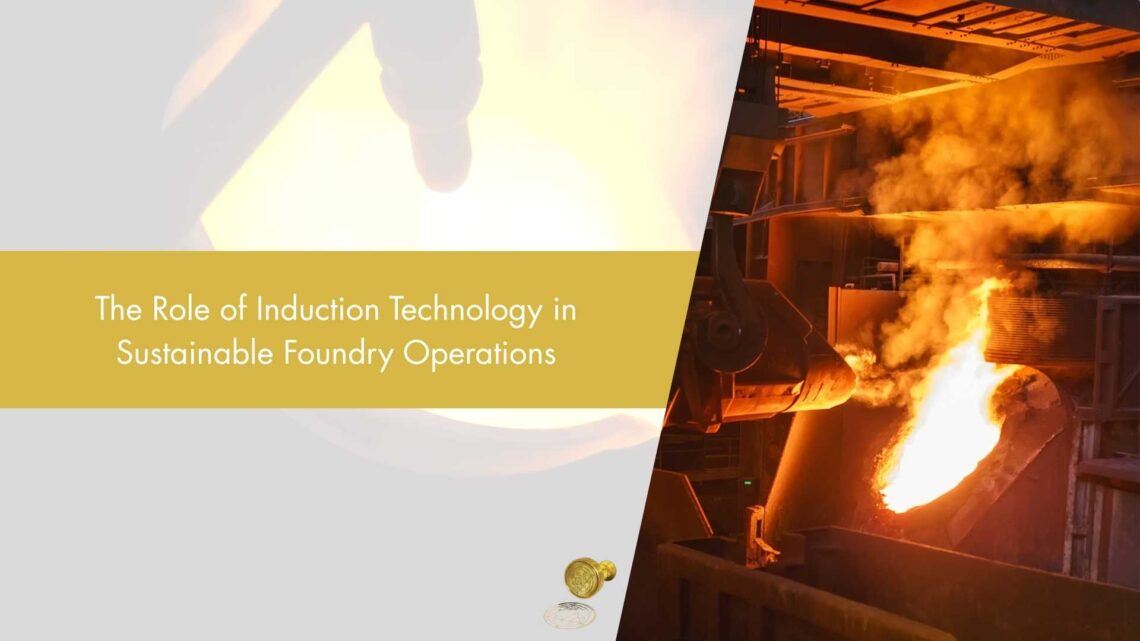
The Role of Induction Technology in Sustainable Foundry Operations
As global industries move toward environmentally responsible manufacturing, foundries are under increasing pressure to improve efficiency, reduce emissions, and minimize resource consumption. Traditional melting methods often consume large amounts of energy and generate significant environmental impacts. This has led many foundries to adopt induction technology as a key solution for sustainable operations.
Discover the Delmer iD Pro Series Induction Furnace, engineered for precision melting, energy efficiency, and superior performance.
Induction furnaces have transformed modern metal casting by offering cleaner, more energy-efficient, and highly controllable melting processes. From reducing carbon emissions to improving metal quality, induction technology plays a vital role in creating greener and more profitable foundry operations.
What is Induction Technology in Foundries?
Induction technology uses electromagnetic induction to generate heat directly within the metal charge. Unlike conventional fuel-fired furnaces, induction furnaces do not rely on combustion. Instead, electrical energy is converted into heat through an electromagnetic field, allowing metals such as iron, steel, copper, aluminum, and alloys to melt efficiently.
This process offers precise temperature control, faster melting cycles, and reduced energy waste, making it ideal for modern foundry applications.
Heat treatment furnaces are designed to alter the physical and mechanical properties of metals through controlled heating and cooling, improving hardness, strength, and durability for various industrial applications.
Why Sustainability Matters in Foundry Operations
Foundries are among the most energy-intensive manufacturing facilities. Rising energy costs, stricter environmental regulations, and growing customer demand for sustainable products have made sustainability a critical business objective.
Sustainable foundry operations focus on:
- Reducing energy consumption
- Lowering greenhouse gas emissions
- Minimizing material waste
- Improving resource efficiency
- Enhancing workplace safety
- Meeting environmental compliance standards
Induction technology directly supports all these objectives.
Delmer Etna CD Series – Precision and consistency inspired by Europe’s mightiest volcano.
Key Benefits of Induction Technology for Sustainable Foundries
1. Improved Energy Efficiency
One of the biggest advantages of induction furnaces is their superior energy efficiency. Since heat is generated directly inside the metal charge, energy losses are significantly lower compared to fuel-based melting systems.
Benefits include:
- Faster melting cycles
- Reduced heat loss
- Lower electricity consumption per ton of metal
- Higher productivity
Improved energy utilization helps foundries reduce operational costs while minimizing their environmental footprint.
2. Reduced Carbon Emissions
Traditional melting systems often burn fossil fuels, producing carbon dioxide, sulfur compounds, and other harmful emissions. Induction furnaces eliminate direct fuel combustion, significantly reducing air pollution.
Environmental advantages include:
- Lower CO₂ emissions
- Reduced particulate matter
- Minimal smoke generation
- Cleaner production processes
When powered by renewable energy sources, induction furnaces can further support carbon-neutral manufacturing goals.
Experience seamless metal casting with the Delmer Continuous Casting Furnace ‘Etna’ cD Series, built for consistency, reliability, and precision.
3. Enhanced Metal Quality
Sustainability is not only about energy savings but also about reducing material waste. Induction furnaces provide precise temperature control and consistent melting conditions, leading to improved metal quality.
Benefits include:
- Reduced oxidation losses
- Better alloy control
- Consistent chemical composition
- Fewer casting defects
Higher-quality melts result in lower rejection rates and less scrap generation.
4. Lower Material Waste
Metal losses during melting can significantly impact production costs and sustainability targets. Induction technology minimizes metal burn-off and oxidation, allowing foundries to maximize material utilization.
Advantages include:
- Higher metal recovery rates
- Reduced scrap generation
- Improved yield
- Better raw material efficiency
This helps conserve valuable resources while improving profitability.
5. Better Workplace Environment
Induction furnaces create a cleaner and safer working environment compared to traditional fuel-fired systems.
Key improvements include:
- Reduced noise levels
- Lower heat radiation
- Minimal smoke and fumes
- Enhanced operator safety
A healthier workplace contributes to employee well-being and regulatory compliance.
Delmer Vulcano Series – Where relentless power meets flawless continuous casting.
6. Precise Process Control and Automation
Modern induction systems can be integrated with advanced automation and digital monitoring technologies. Smart control systems help operators optimize melting parameters in real time.
Features include:
- Automatic power regulation
- Temperature monitoring
- Energy consumption tracking
- Predictive maintenance capabilities
These technologies improve process efficiency while supporting Industry 4.0 initiatives.
Induction Technology and Circular Economy Goals
The foundry industry plays a major role in recycling metals. Induction furnaces are particularly effective for processing recycled scrap materials while maintaining high-quality output.
By enabling efficient recycling and reuse of metals, induction technology supports circular economy principles such as:
- Resource conservation
- Waste reduction
- Sustainable material management
- Lower environmental impact
This makes induction melting an essential component of responsible manufacturing strategies.
Delmer Static Furnace – Unmatched stability, precision, and performance for flawless melts.
Future Trends in Sustainable Foundries
As sustainability standards continue to evolve, induction technology is expected to become even more important. Emerging developments include:
- Energy-efficient medium-frequency induction furnaces
- AI-driven process optimization
- Renewable energy integration
- Advanced refractory technologies
- Smart energy management systems
- Digital foundry monitoring platforms
These innovations will help foundries achieve greater productivity while meeting environmental targets.
Conclusion
Induction technology has become a cornerstone of sustainable foundry operations. By delivering higher energy efficiency, lower emissions, improved metal quality, reduced material waste, and enhanced workplace safety, induction furnaces help foundries balance profitability with environmental responsibility.
As industries worldwide focus on greener manufacturing practices, adopting advanced induction melting solutions is no longer just an operational improvement—it is a strategic investment in the future of sustainable metal casting.
Businesses that embrace induction technology today will be better positioned to meet regulatory requirements, reduce operating costs, and remain competitive in an increasingly sustainability-driven market.
for more information visit opdel.com