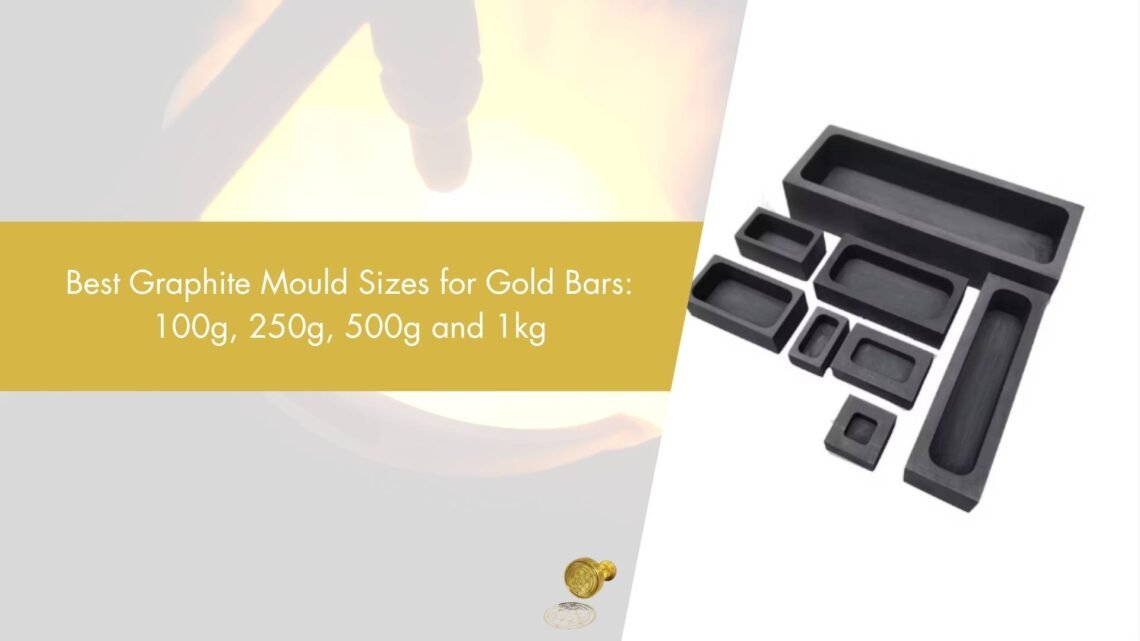
Choosing the right graphite mould size for gold bars is an important decision for bullion manufacturers, gold refineries, jewellers, precious metal dealers, and casting operations. The mould size directly affects the bar weight, production capacity, casting workflow, cooling time, handling, and overall production efficiency.
Explore advanced graphite solutions and applications with our Graphite products and expertise.
Among the most commonly used options are 100g, 250g, 500g, and 1kg gold bar graphite moulds. Each size is suited to a different production requirement, from smaller investment bars and retail products to larger bullion bars.
High-quality graphite is widely used for precious-metal moulds because it offers good thermal stability, thermal conductivity, corrosion resistance, and easy release of cast metal. Commercial gold-bar moulds are available in configurations ranging from approximately 100g to 1kg and beyond.
Quick Answer: Which Gold Bar Mould Size Is Best?
The best graphite mould depends on your production requirement:
| Gold Bar Size | Best Suited For | Typical Mould Configuration |
| 100g | Retail bullion, jewellery businesses, smaller batches | 4, 5, 10 or more cavities |
| 250g | Medium-size bullion production | 2, 4 or multiple cavities |
| 500g | Professional bullion and refinery production | 1, 2 or multiple cavities |
| 1kg | Large bullion bars and refinery operations | Single cavity or multi-cavity |
For example, commercial casting systems can be configured to produce 1 × 1kg, 2 × 250g, 1 × 500g or 4 × 100g gold ingots, depending on the equipment and mould configuration.
What Is a Graphite Mould for Gold Bars?
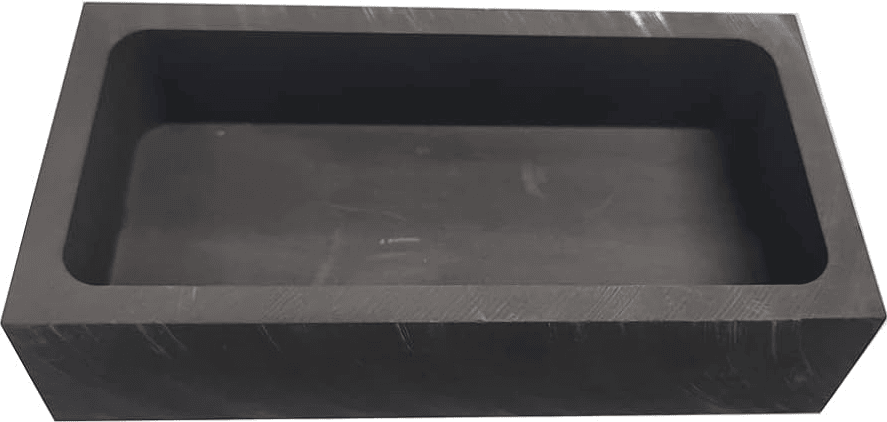
A graphite gold bar mould is a precision-machined cavity used to shape molten gold into a defined bar or ingot size. The mould can be manufactured with one or multiple cavities, allowing operators to cast one or several bars during the same production cycle.
For more precision in metal casting, explore our Square Graphite Casting Moulds, designed for reliable gold, silver, and other precious-metal bar casting applications.
Graphite is particularly suitable for gold casting because it can withstand high temperatures and has good thermal conductivity. Fine-grain and high-density graphite can also provide a smooth mould surface, helping produce clean-looking bullion bars and facilitating bar removal after casting.
The exact mould dimensions should not be selected only by external size. Cavity dimensions, gold purity, bar geometry, casting equipment, cooling conditions, and required bar weight all need to be considered.
1. 100g Graphite Mould for Gold Bars
A 100g gold bar mould is one of the most practical choices for businesses producing smaller bullion bars.
Why choose a 100g gold bar mould?
100g bars are convenient for retail bullion, investment products, jewellery manufacturers, and businesses that want to produce multiple smaller bars rather than one large bar.
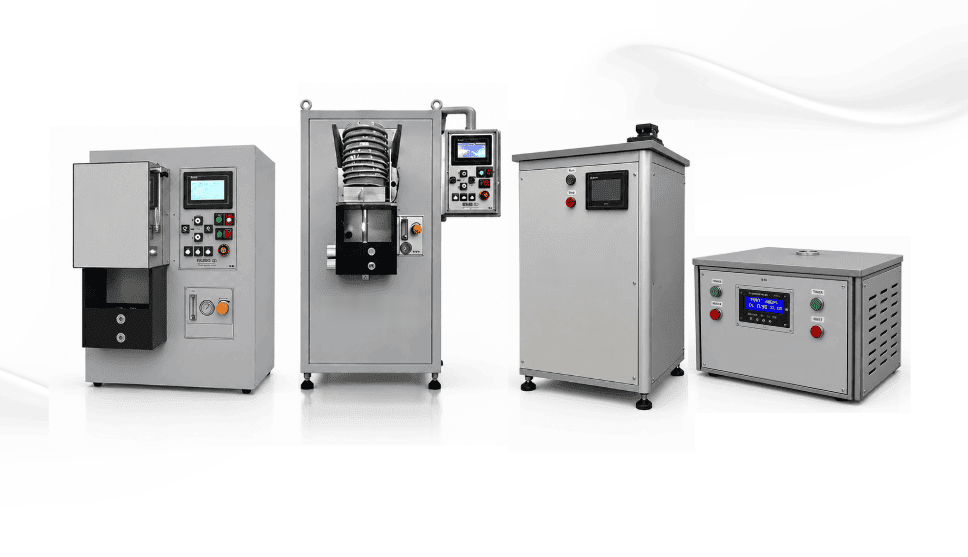
A tunnel furnace is a continuous heating system widely used in precious metals manufacturing, especially for producing gold and silver bars with consistent quality and high throughput. It allows controlled, uniform heating as metal moves through different temperature zones on a conveyor or track system.
A multi-cavity mould can significantly increase output. For example, a four-cavity arrangement can produce four 100g bars in one casting cycle, subject to the capacity and design of the casting machine.
Commercial examples of 100g graphite moulds include cavity dimensions around 35 × 20 × 10 mm, although dimensions vary according to bar design and manufacturer.
Best applications
- Retail gold bullion
- Small and medium gold refineries
- Jewellery manufacturers
- Gold investment products
- Trial and smaller production batches
- Multi-cavity automatic casting systems
Best choice when: your business needs flexibility and higher piece-count production.
2. 250g Graphite Mould for Gold Bars
The 250g graphite gold bar mould provides a useful balance between bar size and production flexibility.
A 250g bar is larger than a typical 100g retail bar while remaining relatively easy to handle and package. It can be a good option for bullion businesses targeting customers who prefer medium-sized investment bars.
Explore our 1kg Gold Induction Melting Furnace – 4 Station IGBT System for efficient, high-precision melting that perfectly complements automated gold and silver bar casting operations.
A commonly published graphite mould configuration for 250g gold ingots has an outer size of approximately 67 × 50 × 26 mm and a cavity around 47 × 25 × 16 mm, but actual dimensions depend on the required bar shape and density calculations.
Best applications
- Medium-size bullion bars
- Gold refineries
- Investment gold products
- Jewellery and precious-metal manufacturers
- Batch casting operations
- Multi-cavity casting
Why 250g can be a good choice
The 250g format can offer a practical middle ground between production volume and individual bar value. For operations requiring multiple bars per cycle, a 2-cavity or 4-cavity 250g mould can be considered depending on the casting machine.
3. 500g Graphite Mould for Gold Bars
A 500g graphite mould for gold bars is commonly used for professional bullion production and medium-to-large casting operations.
Compared with a 100g or 250g bar, a 500g bar allows more gold to be produced per individual bar while remaining substantially smaller than a 1kg bar.
Discover the OPDEL iD Pro Series Induction Furnace, engineered for precision melting, energy efficiency, and superior performance.
Published examples of 500g graphite moulds include external dimensions around 70 × 67 × 26 mm, with a cavity around 50 × 47 × 16 mm. Actual dimensions vary by manufacturer and bar profile.
Best applications
- Gold refineries
- Bullion manufacturers
- Precious-metal dealers
- Investment gold production
- Professional casting operations
- Medium-volume production
Single vs. multi-cavity 500g mould
A single-cavity mould is suitable when production volume is moderate or when the casting system is designed for individual bars.
For higher production requirements, multiple 500g cavities can increase the number of bars produced per cycle, provided the furnace, vacuum system, melting capacity, and cooling system are appropriately matched.
4. 1kg Graphite Mould for Gold Bars
The 1kg graphite gold bar mould is one of the most important sizes for professional bullion and refinery applications.
A 1kg gold bar contains significantly more metal than smaller retail formats and is commonly associated with professional bullion production and larger transactions.
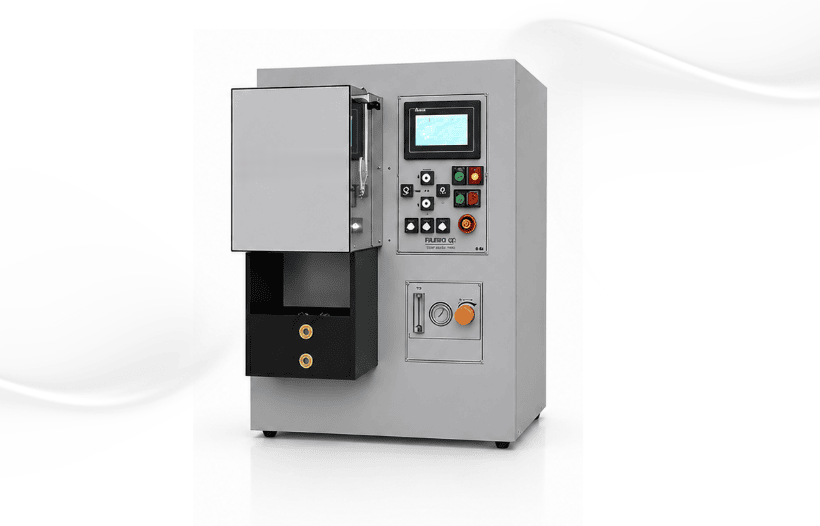
Experience seamless metal casting with the OPDEL Continuous Casting Furnace ‘Etna’ cD Series, built for consistency, reliability, and precision.
Commercially available 1kg graphite mould examples can have external dimensions around 135 × 42 × 32 mm, with cavity dimensions around 115 × 22 × 22 mm. However, dimensions are not universal and should be selected according to the required bar geometry and casting system.
Best applications
- Gold refineries
- Bullion manufacturers
- Precious-metal processing facilities
- Professional gold casting
- Large investment bars
- High-value bullion production
Why choose a 1kg mould?
A 1kg mould is suitable when the production process is designed around larger individual bars. It can reduce the number of individual bars that need to be handled, marked, packaged, and stored compared with producing the same gold quantity in smaller formats.
100g vs 250g vs 500g vs 1kg Gold Bar Mould
The right size depends on your production strategy.
| Factor | 100g | 250g | 500g | 1kg |
| Individual bar size | Small | Medium | Large | Very large |
| Handling | Very easy | Easy | Moderate | Requires more care |
| Retail flexibility | Excellent | Excellent | Good | Moderate |
| Production volume | High with multi-cavity moulds | High | Medium–High | Medium |
| Best for | Retail bullion | Investment & bullion | Professional bullion | Refineries & large bullion |
| Typical cavity setup | Multi-cavity | Multi-cavity | Single/multi-cavity | Usually single cavity |
There is no universally “best” size. The best gold bar graphite mould is the one that matches your required bar weight, casting machine, production volume, and final bar dimensions.
How Many Cavities Should a Gold Bar Graphite Mould Have?
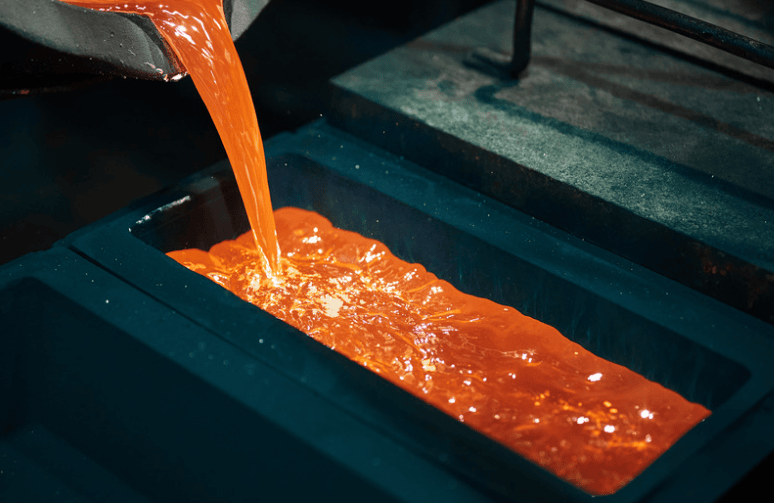
The number of cavities determines how many bars can potentially be cast in a single cycle.
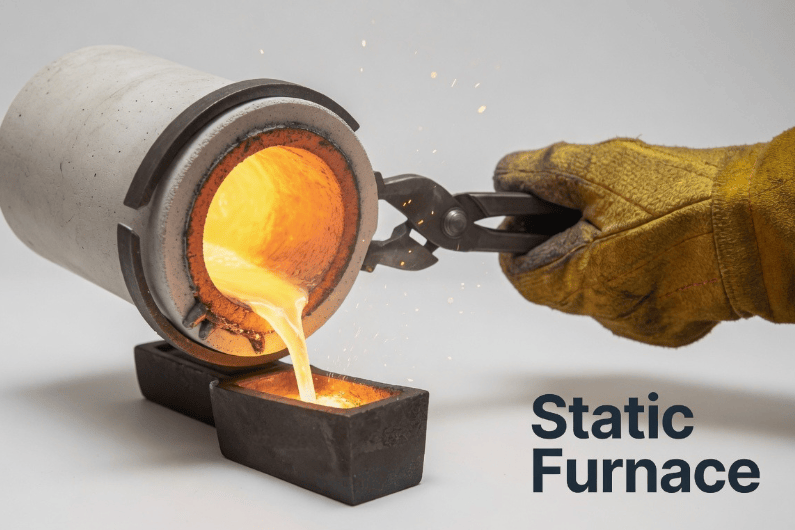
OPDEL Static Furnace – Unmatched stability, precision, and performance for flawless melts.
Common configurations include:
- 1 cavity: Suitable for single-bar production
- 2 cavities: Useful for moderate batch production
- 4 cavities: Suitable for higher production efficiency
- Multiple cavities: Useful for high-volume smaller-bar production
For example, a casting system may be designed around combinations such as four 100g bars, two 250g bars, one 500g bar, or one 1kg bar, depending on the machine and mould configuration.
A multi-cavity mould can improve productivity, but the entire casting system must be capable of supplying and processing the required molten metal volume.
How to Choose the Right Graphite Grade
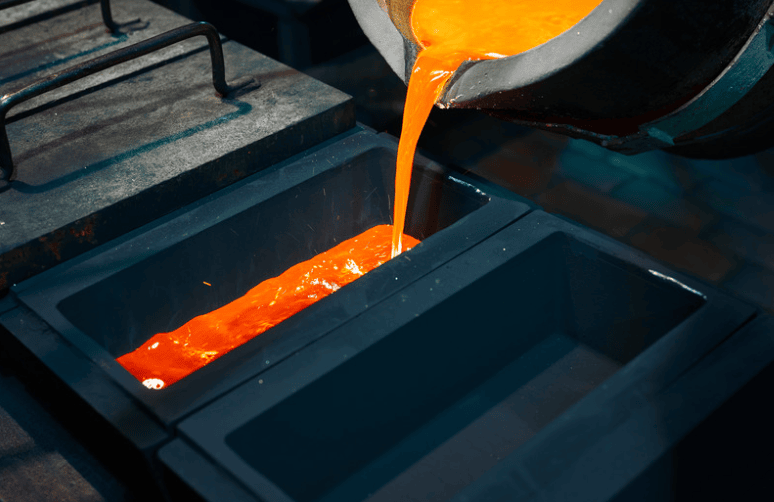
Mould size is only one part of the selection process. Graphite quality can have a major effect on mould life, surface finish, thermal performance, and casting consistency.
For gold bar moulds, consider:
1. Graphite purity
High-purity graphite is generally preferred for precious-metal casting because lower contamination can help maintain a clean casting process.
2. Grain structure
Fine-grain graphite can provide a smoother machined surface and better detail reproduction. Commercial gold mould manufacturers commonly use fine-grain graphite for precious-metal ingot applications.
3. Density
Higher-density graphite can offer improved mechanical strength and durability, although the correct grade depends on the casting process and operating conditions.
4. Thermal conductivity
Good thermal conductivity helps transfer heat from the molten metal through the mould and can contribute to controlled solidification.
Pair your casting line with the 1kg Gold Induction Melting Furnace – 4 Station IGBT System to achieve faster melt cycles, precise temperature control, and consistent feed stock for flawless bullion bar production.
5. Surface finish
A precision-machined and polished cavity can help achieve a cleaner bar surface and facilitate metal release.
6. Thermal shock resistance
Repeated heating and cooling cycles can stress the mould. Graphite with suitable thermal properties can help withstand repeated casting cycles.
What Dimensions Should a Gold Bar Graphite Mould Have?
There is no single standard external dimension for a 100g, 250g, 500g, or 1kg gold bar mould.
The cavity must be engineered according to:
- Gold purity
- Target bar weight
- Bar length and width
- Bar thickness
- Bar shape
- Casting temperature
- Shrinkage considerations
- Mould material
- Casting machine
- Cooling conditions
For example, published commercial specifications show significant differences between the cavity dimensions of 100g, 250g, 500g, and 1kg moulds.
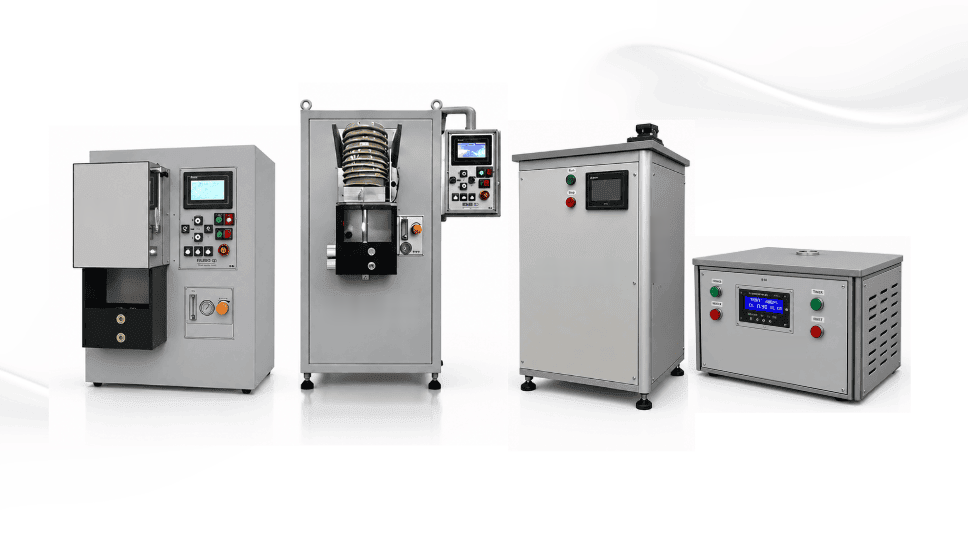
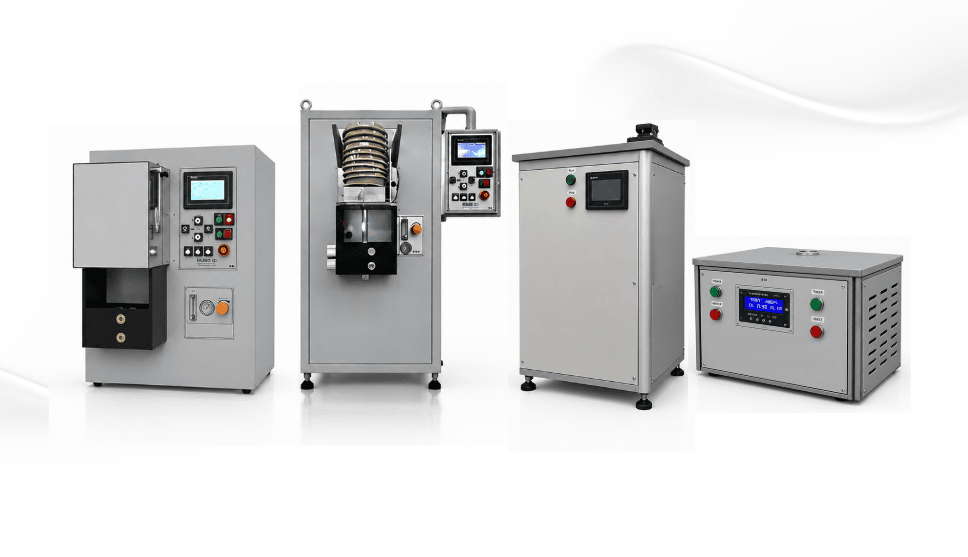
OPDEL Vulcano Series – Where relentless power meets flawless continuous casting.
Therefore, do not select a mould solely by its external dimensions or nominal weight. The cavity and the casting process should be evaluated together.
Graphite Mould for Vacuum Gold Bar Casting

For professional gold-bar production, graphite moulds can be integrated with vacuum gold bar casting machines.
OPDEL Etna CD Series – Precision and consistency inspired by Europe’s mightiest volcano.
Vacuum casting systems are designed to control the casting environment and can help produce consistent bullion bars. Commercial equipment is available with mould configurations supporting multiple gold-bar weights and automatic casting cycles.
For higher-volume production, the mould should be matched to:
- Induction melting power
- Gold melting capacity
- Vacuum pump capacity
- Casting chamber dimensions
- Number of cavities
- Cooling system
- Cycle time
- Bar extraction process
This approach ensures that the mould is not treated as an isolated component but as part of the complete gold-bar casting system.
How to Select the Best Gold Bar Mould for Your Business
Use the following approach:
Choose 100g if:
You primarily sell smaller investment bars or require high production flexibility.
Choose 250g if:
You want a medium-size bullion format that balances bar size and customer accessibility.
Choose 500g if:
You operate a professional bullion or refinery business and require larger individual bars.
Choose 1kg if:
Your production focuses on larger professional bullion bars and your casting equipment is designed for 1kg production.
Choose a multi-cavity mould if:
Your priority is producing several smaller bars in each casting cycle.
Choose a single-cavity mould if:
Your process focuses on larger bars or lower-volume production.
Why Graphite Is Preferred for Gold Bar Moulds
Graphite offers several properties that make it suitable for precious-metal casting:
- High-temperature resistance
- Good thermal conductivity
- Thermal stability
- Relatively easy metal release
- Corrosion resistance
- Machinability
- Suitable surface finish after precision machining
These properties are among the reasons graphite moulds are widely used for gold, silver, copper, and other non-ferrous metal casting applications.
Continuous casting machine produces metal rods, strips, or profiles directly from molten metal in a continuous process, ensuring high productivity, uniform quality, and reduced material wastage.
Gold Bar Graphite Moulds from OPDEL
OPDEL provides graphite mould solutions for precious-metal casting applications, including gold and silver bar production.
The mould range can be configured around commonly required bullion weights such as:
- 100g gold bar graphite mould
- 250g gold bar graphite mould
- 500g gold bar graphite mould
- 1kg gold bar graphite mould
- Single-cavity moulds
- Multi-cavity moulds
- Custom graphite mould designs
For businesses operating a gold refinery, bullion manufacturing unit, jewellery casting facility, or precious-metal processing plant, mould selection should be matched with the complete melting and casting setup.
Need the right graphite mould for your gold bar casting setup? Contact OPDEL with your required bar weight, cavity count, and casting machine specifications for a suitable mould configuration.
Frequently Asked Questions
What is the best graphite mould size for gold bars?
The best size depends on your required gold bar weight and production volume. 100g, 250g, 500g, and 1kg are practical choices for different bullion applications.
What is the most common gold bar mould size?
There is no single universal size. 100g and 1kg are important formats for different markets, while 250g and 500g provide intermediate options.
Can one graphite mould make different gold bar weights?
Yes, if the mould is specifically designed with multiple cavities of different capacities. Some professional casting systems support combinations such as 100g, 250g, 500g, and 1kg configurations.
Is graphite suitable for gold casting?
Yes. Graphite offers high-temperature resistance, thermal conductivity, thermal stability, and good release characteristics, making it suitable for many gold and precious-metal casting applications.
Can graphite gold bar moulds be customized?
Yes. Graphite moulds can be precision-machined according to required bar dimensions, cavity count, branding, markings, and casting-machine specifications.
How many cavities should a gold bar mould have?
It depends on the required production volume and bar weight. A single cavity may be suitable for 1kg bars, while multiple cavities can be useful for producing several 100g or 250g bars per cycle.
What graphite is best for gold bar moulds?
High-quality, fine-grain, high-density graphite is commonly preferred for precision gold-bar moulds because it can provide good surface quality and durability. The appropriate grade should ultimately be selected based on the casting temperature, cycle frequency, machine type, and required mould life.
Conclusion
Selecting the right graphite mould size for gold bars is essential for efficient and consistent bullion production.
100g moulds are ideal for smaller investment bars and high-volume multi-cavity production. 250g moulds offer a flexible medium-size option. 500g moulds are suitable for professional bullion production, while 1kg graphite moulds are well suited to larger bullion bars and refinery operations.
The best solution is not simply the largest or smallest mould. It is the combination of correct cavity dimensions, graphite quality, cavity count, casting technology, and production requirements.
For a professional gold casting setup, select the mould and casting machine as an integrated system to achieve consistent bar weight, surface quality, production efficiency, and mould life.
for more information visit opdel.com