How to Cast 20 kg and 30 kg Silver Bars for Indian & International Markets
The global bullion industry operates under extremely strict manufacturing, assaying, and quality standards—especially when producing large-format silver bars for institutional banking, vaulting, jewelry manufacturing, and international bullion trading. While both 20 kg and 30 kg silver bars are widely used across India and export markets, there is an important technical distinction that refiners, investors, and bullion manufacturers must understand before production begins.
A tunnel furnace is a continuous heating system widely used in precious metals manufacturing, especially for producing gold and silver bars with consistent quality and high throughput. It allows controlled, uniform heating as metal moves through different temperature zones on a conveyor or track system.
Understanding LBMA Silver Bar Standards
The London Bullion Market Association (LBMA) establishes the globally accepted benchmark for wholesale bullion trading. According to official LBMA Good Delivery Rules, standard Large Silver Bars must weigh between:
- 750 to 1,100 troy ounces
- Approximately 23 kg to 34 kg
The recommended industry target range is:
- 900 to 1,050 troy ounces
- Approximately 28 kg to 33 kg
This means:
- A 30 kg silver bar falls comfortably within official LBMA Good Delivery specifications.
- A 20 kg silver bar is considered a custom or non-standard wholesale weight internationally, although it remains highly popular in India’s domestic bullion and jewelry sectors.
Despite this difference, both formats must follow strict LBMA-style refining, casting, assaying, and responsible sourcing methodologies to meet professional market expectations.
Explore our 1kg Gold Induction Melting Furnace – 4 Station IGBT System for efficient, high-precision melting that perfectly complements automated gold and silver bar casting operations.
Physical Specifications of 20 kg and 30 kg Silver Bars
Proper dimensional engineering is essential to achieve smooth surface finish, stackability, shrinkage control, and easy mold release.
30 kg Silver Bar Specifications (LBMA-Compliant)
| Parameter | Specification |
| Weight Range | Approx. 964.5 Troy Ounces |
| Purity | Minimum 999 Fine Silver |
| Top Length | 300 mm ± 50 mm |
| Top Width | 130 mm ± 20 mm |
| Height | 80 mm ± 20 mm |
| Shape | Tapered sides with 5°–15° undercut |
20 kg Silver Bar Specifications (Custom / Domestic Market)
| Parameter | Specification |
| Weight Range | Approx. 643 Troy Ounces |
| Purity | Minimum 999 Fine Silver |
| Top Length | 250–280 mm |
| Top Width | 100–115 mm |
| Height | 60–70 mm |
| Market Usage | Domestic India & Jewelry Industry |
The tapered mold geometry is extremely important because it allows clean extraction from graphite molds without damaging edges or surface finish.
Discover the Delmer iD Pro Series Induction Furnace, engineered for precision melting, energy efficiency, and superior performance.
Complete Silver Bar Casting Process
Phase 1: Silver Melting and Metallurgical Preparation
Raw Material Charging
The process begins with loading high-purity silver crystals or electrolytically refined silver granules into a high-frequency induction melting furnace.
High-purity feedstock is critical for achieving:
- 999 or 999.9 fineness
- Low contamination levels
- Excellent surface quality
- Uniform grain structure
Melting Temperature Control
Silver melts at:
961.8^{\circ}C
However, industrial casting operations typically maintain molten silver between:
1050^{\circ}C\ \text{to}\ 1100^{\circ}C
This elevated temperature improves:
- Metal fluidity
- Mold filling consistency
- Surface smoothness
- Gas release behavior
Oxygen Absorption Control
Molten silver absorbs extremely high volumes of oxygen, which can cause:
- Blistering
- Surface spitting
- Internal porosity
- Shrinkage cavities
- Structural weakness
To prevent oxidation defects, refiners maintain a reducing atmosphere using:
- Argon gas
- Nitrogen gas
- Graphite powder covering
This step is essential for producing investment-grade bullion bars.
Experience seamless metal casting with the Delmer Continuous Casting Furnace ‘Etna’ cD Series, built for consistency, reliability, and precision.
Phase 2: Mold Preparation and Silver Pouring
Graphite Mold Selection
Professional bullion refiners use:
- High-density isotropic graphite molds
- Thermal shock resistant mold systems
- Precision-machined cavity dimensions
The molds are preheated between:
300^{\circ}C\ \text{to}\ 400^{\circ}C
Preheating prevents:
- Steam explosions
- Thermal cracking
- Rapid solidification defects
- Uneven cooling stress
A thin layer of carbon soot or technical release oil is applied to improve mold release characteristics.
Controlled Silver Pouring
The molten silver must be poured:
- Smoothly
- Continuously
- Without interruption
- At stable temperature
Improper pouring may lead to:
- Cold shuts
- Structural layering
- Surface wrinkles
- Internal weakness
Controlled Solidification Technique
One of the most important steps in LBMA-style silver bar manufacturing is directional solidification.
Delmer Static Furnace – Unmatched stability, precision, and performance for flawless melts.
A soft oxygen-deficient gas flame is applied to the top surface while the silver cools inside the mold. This technique ensures:
- Bottom-up solidification
- Controlled gas escape
- Reduced shrinkage cavities
- Smooth mirror-like top finish
This process significantly improves the cosmetic and structural quality of the final bullion bar.
Phase 3: Cooling, Quenching, and Surface Finishing
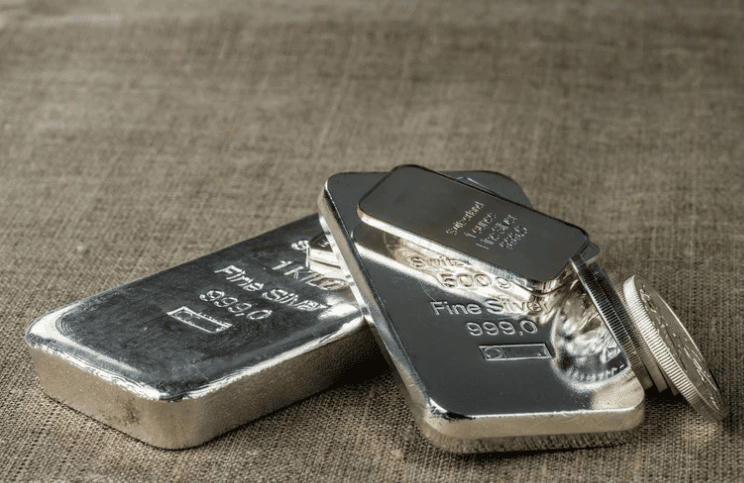
After the bar solidifies below approximately:
500^{\circ}C
The bar is safely removed from the mold and quenched in a demineralized water bath.
Surface Cleaning Process
The bullion bar is then cleaned using:
- Mild non-reactive solutions
- Soft surface treatment methods
- Controlled washing systems
Aggressive grinding or abrasive polishing should be avoided because it can:
- Alter official weight
- Damage stamp quality
- Reduce surface uniformity
Professional bullion markets prefer natural cast textures with a clean and uniform appearance.
Pair your casting line with the 1kg Gold Induction Melting Furnace – 4 Station IGBT System to achieve faster melt cycles, precise temperature control, and consistent feed stock for flawless bullion bar production.
LBMA-Compliant Silver Assaying and Quality Control
Every batch of silver must undergo strict metallurgical testing before commercial release.
Sampling Methods
Common professional sampling methods include:
- Dip sampling from molten metal
- Vacuum pin-tube sampling
- Controlled laboratory extraction
Silver Purity Testing Technologies
Modern bullion refiners commonly use:
ICP-OES Analysis
Inductively Coupled Plasma Optical Emission Spectrometry provides highly accurate elemental analysis for bullion certification.
Potentiometric Titration
This traditional wet chemistry technique remains widely trusted for silver purity verification.
Minimum acceptable bullion purity:
999.0\ \text{parts per thousand}
Silver Bar Marking Requirements
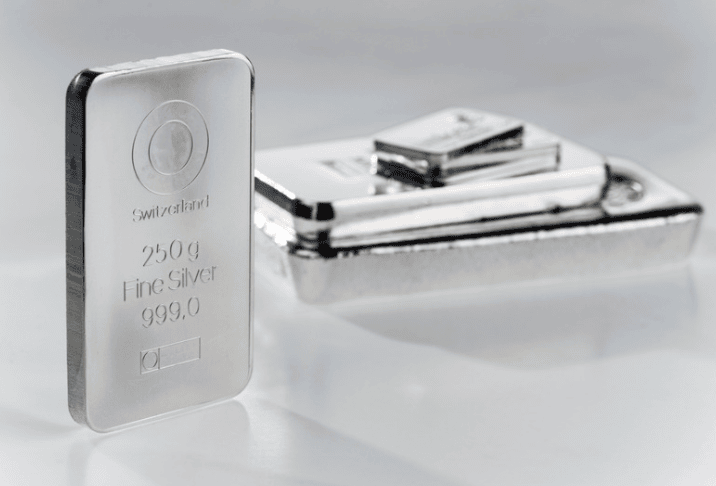
Professional bullion bars require permanent and legible markings stamped on the largest surface area.
Delmer Vulcano Series – Where relentless power meets flawless continuous casting.
Required Bullion Markings
Refiner’s Logo
The official refinery stamp or trademark.
Serial Number
Unique alphanumeric traceability code linked to production records.
Purity Mark
Typically stamped as:
- 999
- 999.9
Year of Manufacture
Four-digit production year, such as:
- 2026
- 2027
Important LBMA Weight Rule
For official wholesale LBMA silver bars, the exact weight is generally NOT stamped directly onto the bar.
The certified delivery weight is instead documented using:
- Approved vault records
- Machine-readable weight lists
- Digital logistics documentation
However, in India’s domestic bullion market, 20 kg bars are commonly stamped with:
- 20 KG
- 20000 g
This is standard commercial practice for jewelry manufacturers and regional bullion trading.
Delmer Etna CD Series – Precision and consistency inspired by Europe’s mightiest volcano.
International Market Compliance vs Indian BIS Standards
International OTC and Vault Markets
For international bullion trading:
- The refinery must appear on the official LBMA Good Delivery List.
- Bars must comply with strict vaulting and transport requirements.
- Secure palletization is mandatory.
- Digital certified weight documentation is required.
Typical pallet loads range between:
Bars are tightly banded and prepared for institutional handling.
Continuous casting machine produces metal rods, strips, or profiles directly from molten metal in a continuous process, ensuring high productivity, uniform quality, and reduced material wastage.
Indian Market Compliance (BIS & GIFT City)

India’s bullion infrastructure increasingly aligns with global standards through:
- BIS regulations
- IIBX systems
- GIFT City bullion ecosystem
- India Good Delivery Standards
BIS Alignment
The Bureau of Indian Standards (BIS) supports:
- 999 fine silver purity
- Metric bullion sizing
- Hallmarking alignment
- Industrial bullion traceability
IIBX and GIFT City Requirements
For bullion entering India through the India International Bullion Exchange (IIBX):
- Bars should originate from LBMA-approved refiners or India Good Delivery-certified refiners.
- 20 kg bars are commonly used for jewelry production pipelines.
- 30 kg bars are preferred for institutional banking and bullion vault storage.
Final Thoughts
The manufacturing of 20 kg and 30 kg silver bars requires far more than simply melting and pouring metal. Professional bullion production demands:
- Metallurgical precision
- Controlled atmosphere melting
- Advanced assaying
- Dimensional engineering
- International compliance
- Responsible sourcing
While 30 kg silver bars align directly with LBMA wholesale trading standards, 20 kg silver bars continue to dominate India’s jewelry and commercial bullion sectors due to their practical handling advantages.
For refiners targeting both domestic and international markets, following LBMA-style methodologies remains the most effective path toward producing high-quality, investment-grade silver bullion bars trusted worldwide.
for more information visit www.opdel.com