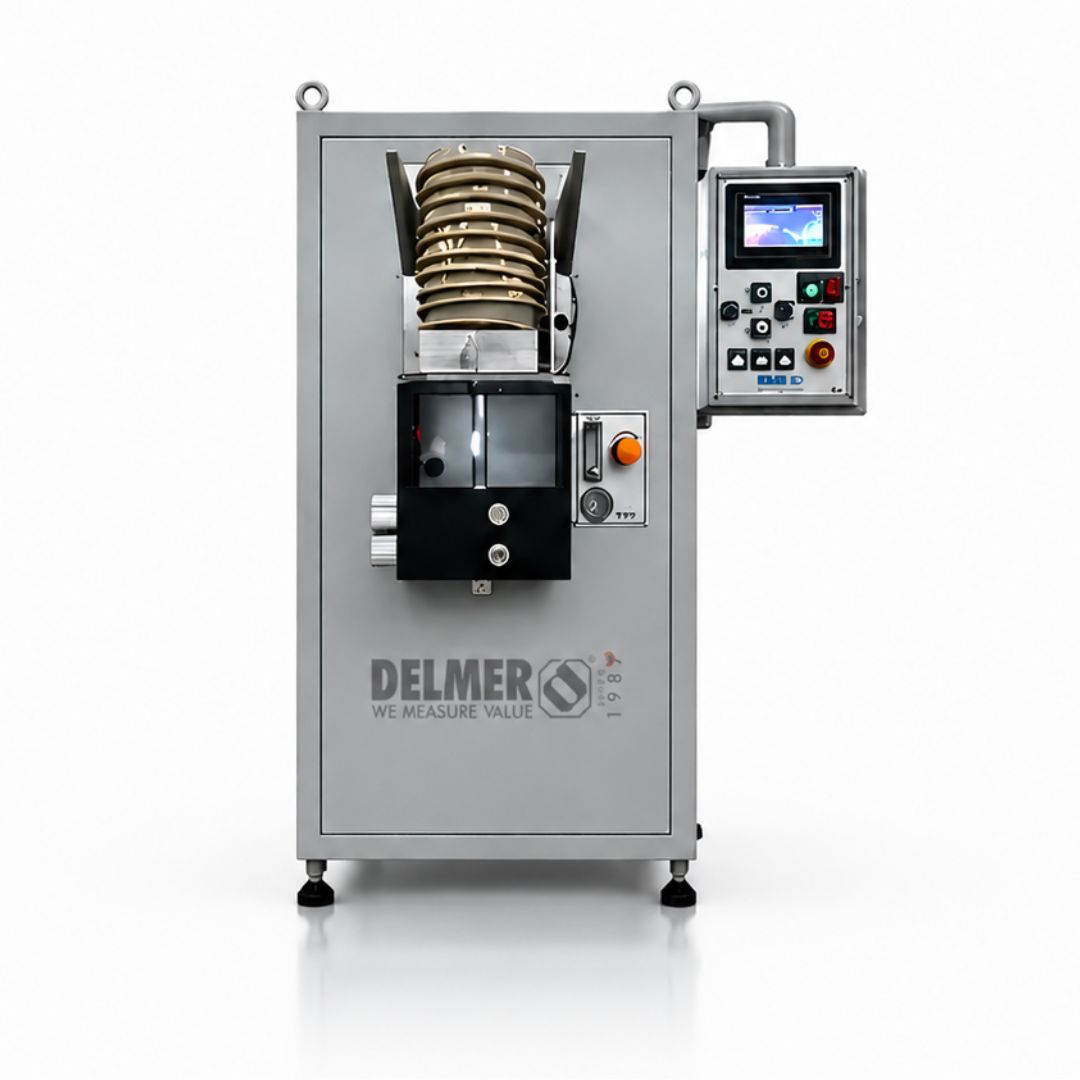
The "ETNA" series bring together the range of continuous casting furnaces with capacity of the crucible from 10 up to 140 kg. The user is helped in his work from a graphical interface and display. Access to the machine body is secured by a tubular frame and movable panel for easy maintenance. The drive system for profile is made aluminum body is completely cooled and driven by a stepper motor coupled to a planetary gear, it should be integrated with the casting chamber. All this system is closed by a cover easy to remove: the access to equipment melting (Ceramic jacket, chain bushings, thermocouples) is very fast minimizing the time for replacement. The cooling socket, in harmony with the equipment has been refined so that it can offer the best possible performance. The heart of the machine consists of a mid-frequency system completely designed and built by the Technical Opdel. These furnaces are often used for special profiles where the amount of metal to be melted is high. It can use accessories such as shears or saws for the cutting of profile, trays for cooling the same. In some case an additional tilting head can fill the empty crucible directly with liquid metal in order to reduce the stop of the production.
A continuous casting machine continuously melts and solidifies precious and non-ferrous metals into rods, strips, billets and custom profiles. It offers higher productivity, better metal recovery and improved surface quality than traditional ingot casting.
A jewellery continuous casting machine improves metal yield, reduces material waste, delivers consistent quality and shortens production time. It is ideal for high-volume jewellery production.
A continuous casting furnace can process gold alloys, silver alloys, copper, brass, bronze, jewellery alloys and other non-ferrous metals with excellent casting consistency.
An induction continuous casting machine melts metal using medium-frequency induction heating and continuously pulls the solidified profile through a precision cooling system for uniform production.
Continuous casting equipment can produce round rods, square bars, strips, billets, tubes and custom profiles used in jewellery making, wire drawing and rolling mills.
Yes. Continuous casting offers better metal recovery, lower energy consumption, fewer defects and improved surface finish while reducing production downtime.
Continuous casting machines are widely used in jewellery manufacturing, precious metal refining, copper processing, industrial foundries, rolling mills and minting operations.
Yes. Depending on the model, continuous casting machines can manufacture various rod diameters, strips, tubes and customized profiles for different production requirements.
Yes. Continuous casting technology minimizes scrap, reduces remelting and improves precious metal recovery, making it highly efficient for gold and silver processing.
Yes. A continuous casting machine can be integrated with rolling mills, wire drawing machines and other downstream equipment for a complete production line.
Inert gas protects molten metal from oxidation during casting, helping produce cleaner surfaces, better metallurgical quality and more consistent finished products.
The ideal gold continuous casting machine depends on production capacity, alloy type and profile dimensions. Choosing the right model ensures maximum efficiency and product quality.